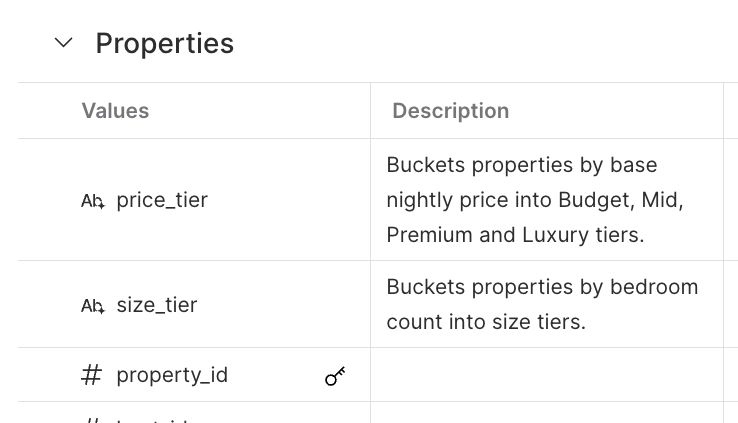
Teach AI your business
Schemas describe your data. They do not explain your business.
The context layer is where that explanation lives, owned by your data team and available to every tool that asks.
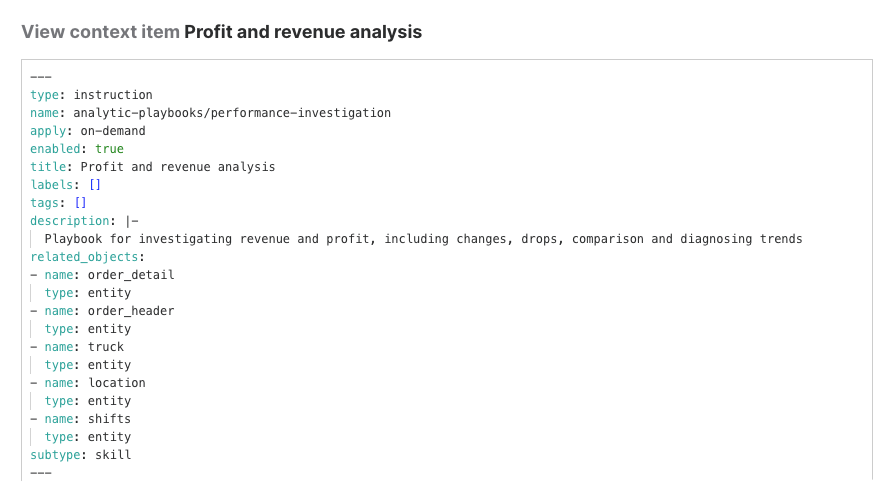
Instructions, skills, and memory
Instructions carry the standing rules of your business. Skills are analysis playbooks - how to run a revenue-impact investigation, which canonical metric to use at each step. Memory records events for later analysis.
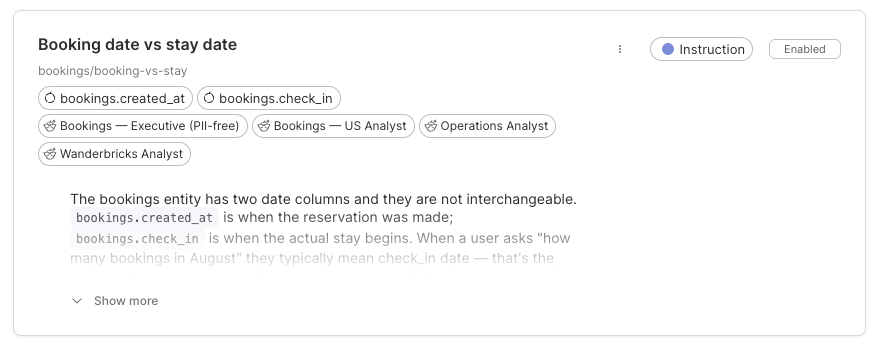
Context follows the model
Every context item links to the semantic objects it describes, so retrieval is scoped by the model graph - an agent gets the context for the entities and metrics in the question.
Context lives in the same Git repository as the logic. A change goes through branch, test, review, and audit trail like any other change.
Same logic, different context
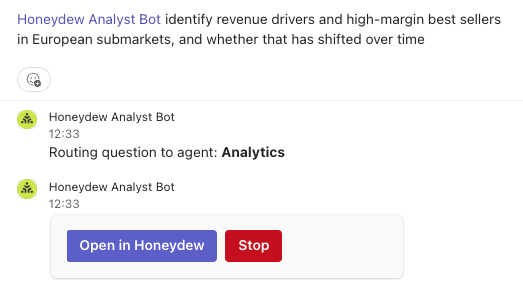
An agent is a domain paired with the context it needs. Finance and sales can each have their own - different definitions of what matters, different playbooks - over one shared model.
Nothing is duplicated. Change a metric once and every agent that uses it moves with it.
Context shared by AI and BI
Both humans and AI agents need context in order to understand how to use the data. When users say an acronym like GMV, what do they mean? What metrics matter? What business nuances are important?
Contextual metadata in Honeydew is available to BI users as documentation and to AI as a managed business context.