Modeling
Modeling defines what your data means. Build it in minutes with AI.
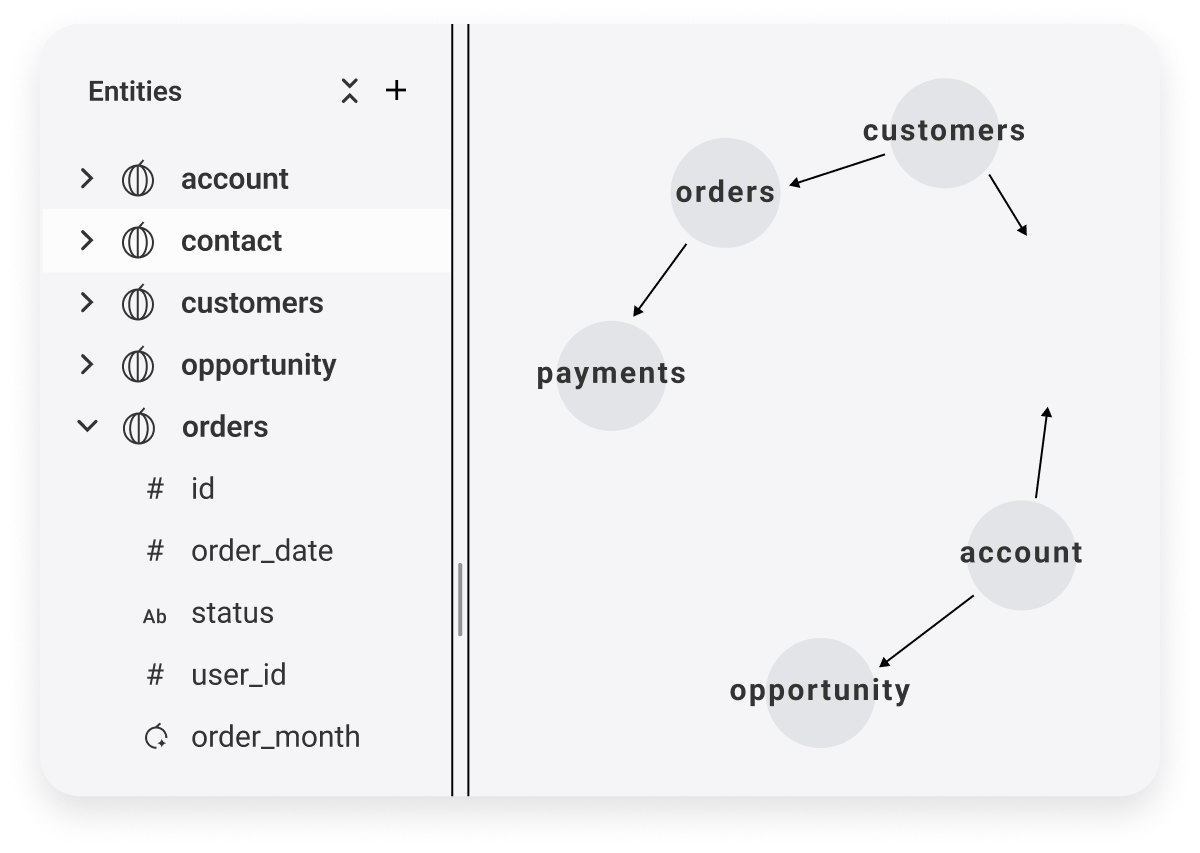
It turns your tables and tribal knowledge into business logic - the entities, metrics, and relationships that describe how your company actually works.
Metrics: the language of the business
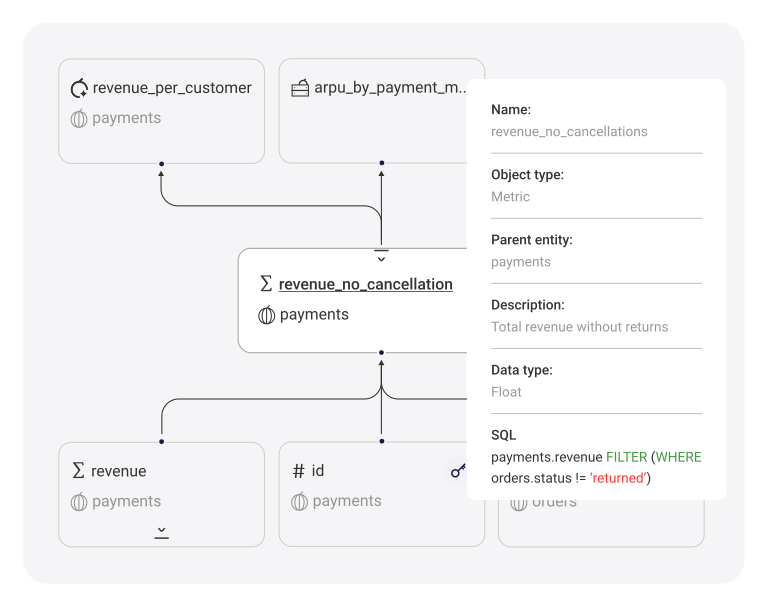
Metrics are how your business measures itself — Revenue, Active Users, Retention, Margin.
Define those metrics once, and reuse them everywhere. The Honeydew semantic compiler constructs on-the-fly correct SQL for any data consumer that needs them.
One model, a domain per team
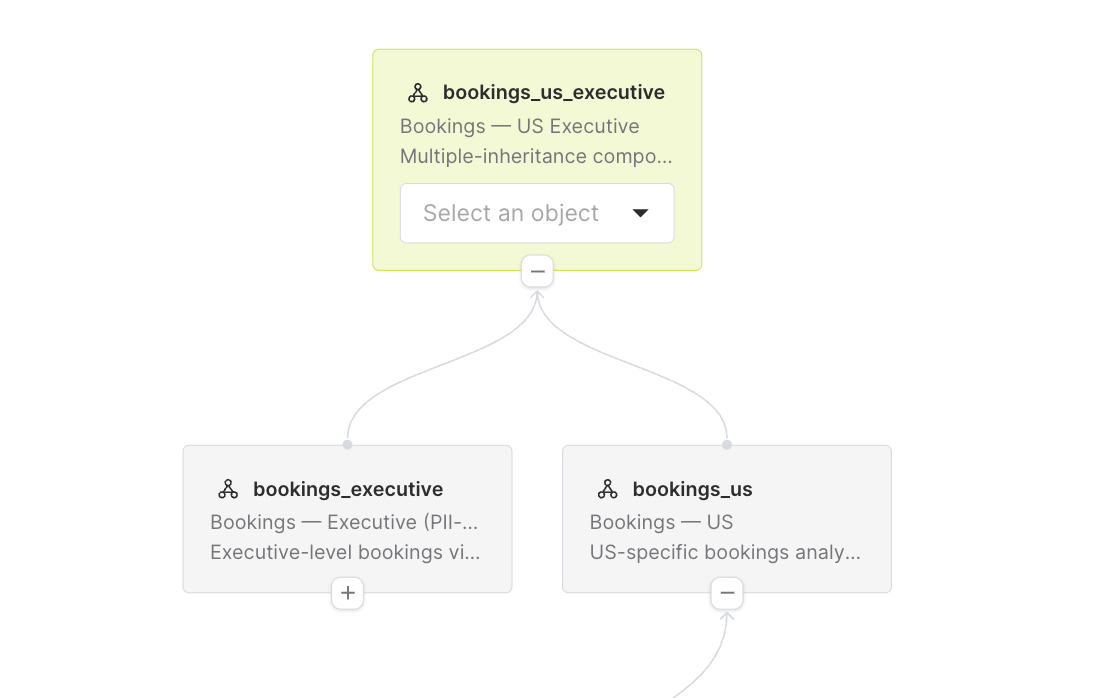
Teams don't fork the model - they extend it. A team's domain starts from the shared base and changes what differs: a regional filter added, PII columns dropped, a warehouse role pinned.
Everything else stays shared. Fix a metric in the base and every domain built on it gets the fix.