Semantic Compiler
The AI decides what to ask. It never decides how.
Compilation is deterministic, so the same question becomes the same SQL whether an agent, a dashboard, or Excel asked it.
Compiler-backed SQL,
not text-to-SQL
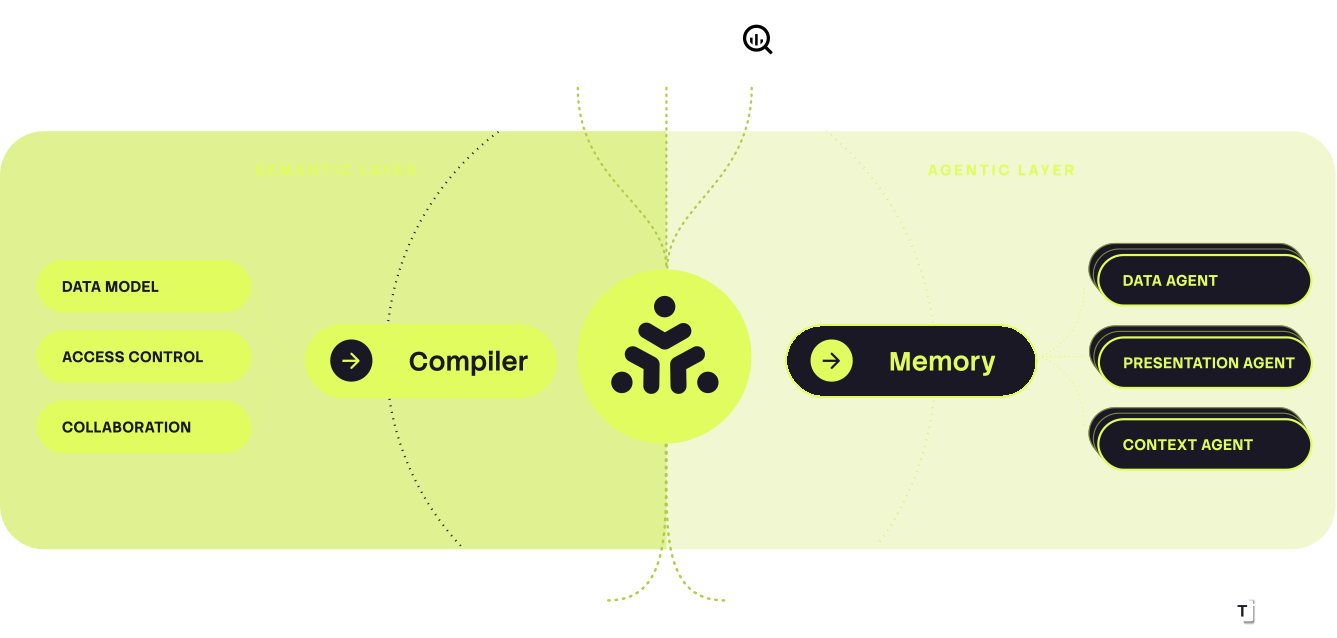
Honeydew's AI does not guess SQL — it compiles it.
Each analytical step is translated into a compiler plan that resolves metrics, joins, and filters from the semantic model before generating SQL.
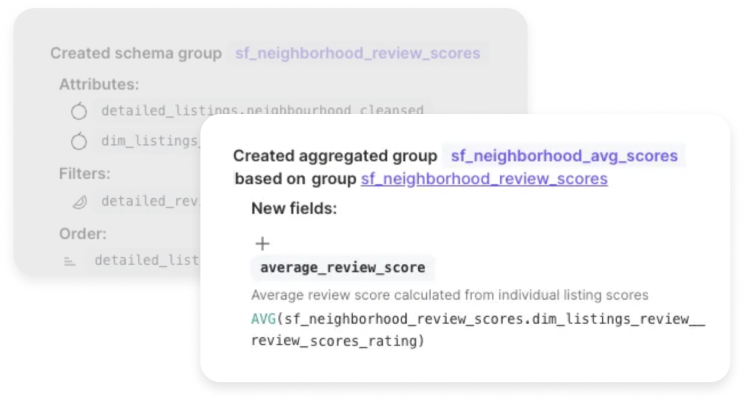
When steps depend on one another, Honeydew re-compiles the logic, carrying forward lineage and constraints so results remain consistent.
AI and BI share the same compiler
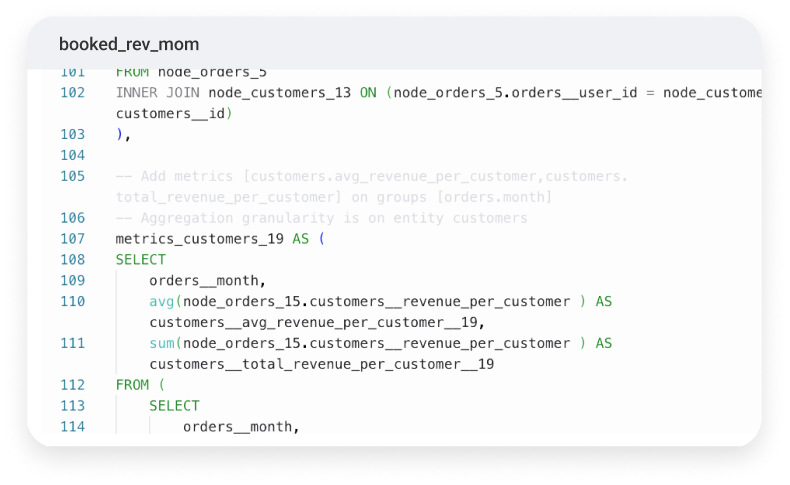
AI and BI pull from the same semantic definitions, so they never diverge.
When an AI agent asks for Revenue by Region and a BI dashboard runs the same metric, both use the exact same joins, filters, and logic defined in Honeydew.
There is no second set of definitions, no duplicated logic, and no room for AI to invent its own interpretation.
Each step knows what the last one found
An analysis runs as a sequence of steps.
Each step is aware of the previous ones, sharing both the results and the semantic context (entities, metrics, and filters) defined in the model.
This makes complex analysis like "compare retention drivers between EU and US cohorts" precise and reproducible.
Every answer shows its work
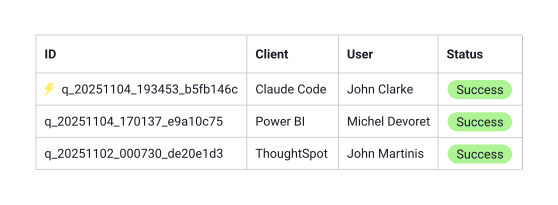
Every AI session is logged and explainable — from inputs and plans to executed SQL and results.
Teams can trace how the AI reasoned, what definitions it used, and how it judged its own output.